
The fusion of diverse cultural aesthetics into fashion is not a new phenomenon. In the 19th century, a notable influence came from an unexpected quarter: Albania. A dive into the archives of the Illustrated London News reveals how Albanian designs and patterns seamlessly integrated into the very fabric of Parisian haute couture.
The Velvet & Reps Fusion

Albanian attire, featuring a design; the base is made of reps, and the velvet stripes are integrated into the material
A striking feature of Albanian influence is seen in the use of fabric. A fashion update from 27th November 1852 describes an “Albanian dress, with pattern; the ground is of reps and the stripes of velvet are woven in the stuff.” The melding of velvety stripes with the sturdy reps fabric embodies a marriage of luxury with functionality, a hallmark of Albanian traditional wear.
The Albanian Corsages
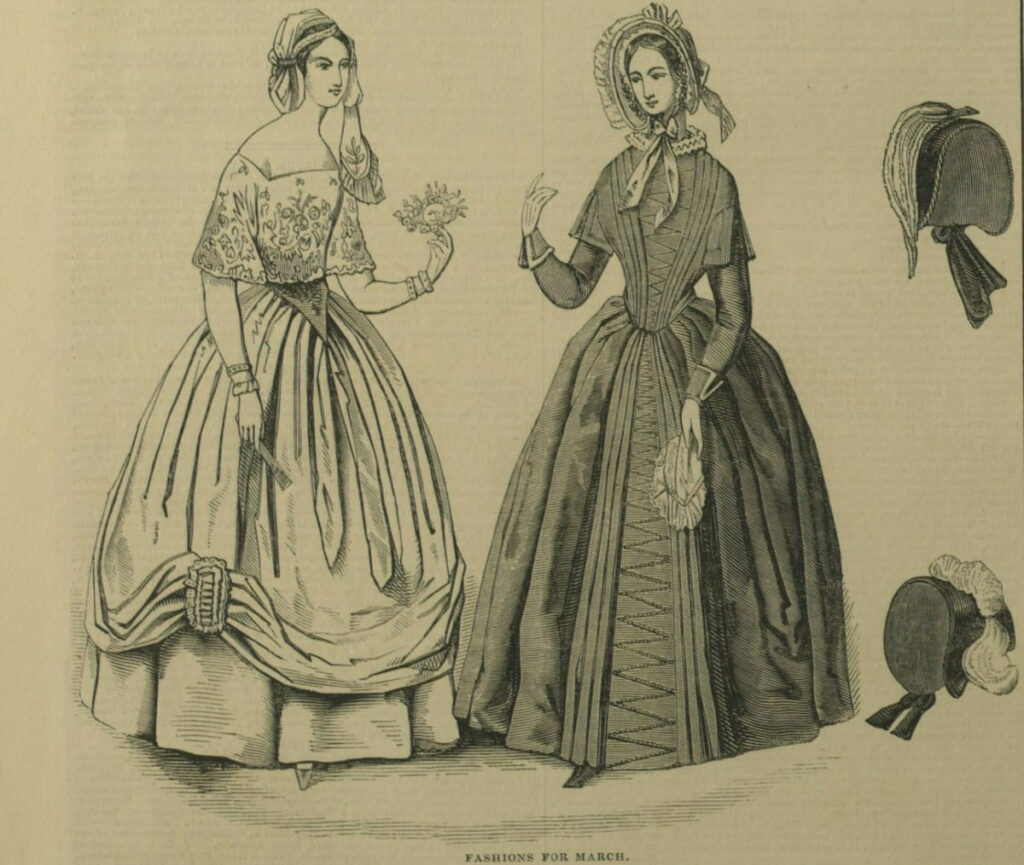
The Albanian corsages. Those open down the front, and laced with black velvet, were in great favour in mid 19th century.
Corsages have been a significant part of Parisian fashion, but a twist in their design was observed in February 1844. The Illustrated London News mentioned, “The Albanian corsages. Those open down the front, and laced with black velvet, are in great favour.” This design’s distinctiveness, especially the frontal opening and the black velvet lacing, is reminiscent of the bodices seen in traditional Albanian attire.
East Meets West: The Albanian Stripes

Albanian-inspired tops with front openings, accented with black velvet, were a popular trend in the mid-19th century.
April in Paris saw an eclectic blend of Eastern and Western designs. The fashion column from 3rd April 1852 reads, “the valencias, especially, are very recherche. The latest style is to wear them Chines, with Albanian stripes.” The combination of “Chines” (likely referring to Chinese-inspired designs) with Albanian stripes shows the global melting pot that Parisian fashion had become.
Concluding Thoughts
The 19th-century fashion world of Paris, though always evolving, remained open to global influences. The subtle integration of Albanian designs into Parisian wear stands as a testament to the universality of fashion. It showcases that style knows no boundaries and that beauty can be found in the fusion of diverse cultural aesthetics.
It also begs the question: What other lesser-known cultural influences have woven their way into the rich tapestry of global fashion? As the world of fashion continues to evolve, it will always remain a reflection of our global heritage.